REJECT THE WORDS OF JESUS TO YOUR OWN PERIL (2)


As Moses lifted serpent…Son of man be lifted up (John 3:14).
(…continues from part one…)
2) Who would have thought that the Mosaic serpentine suspension in the wilderness was adumbrative of the Golgotha sanguineous event, a prophetic bethinking of Genesis 3:15? The incarnational quiddity is befittingly a prognostication of the soteriology. Salvation is solely an authorship of Jesus Christ and for this reason Jesus catechizes John 3:36 “He that believeth on the Son hath everlasting life: and he that believeth not the Son shall not see life; but the wrath of God abideth on him.” Without Jesus there certainly will never be salvation of the soul of mankind. John 5:24-25 “Verily, verily, I say unto you, He that heareth my word, and believeth on him that sent me, hath everlasting life, and shall not come into condemnation; but is passed from death unto life. 25) Verily, verily, I say unto you, The hour is coming, and now is, when the dead shall hear the voice of the Son of God: and they that hear shall live.” The Christ is the Son of God, and from every corner of the earth, He must be heard by His sheep. To their own peril, those who have advertently rejected His word will not hear the salvaging voice of the Lord of glory.
Quite unarguably, the grand design of His incarnational event is of soteriological intent. The Incarnation is undoubtedly of paramount acceptation: for it is protected by the approbation of the Divine counsel of the Godhead. John 6:35 “And Jesus said unto them, I am the bread of life: he that cometh to me shall never hunger; and he that believeth on me shall never thirst.” This verse is Christological in revelation. It points out Jesus as the force of the soteriological actuation. Ask yourself why Jesus will use the personal “I” “Me” pronouns. Among the Trinitarian counsel of the Godhead, He, the Christ, takes full responsibility of appropriating salvation to he who comes to Him. The pronoun ‘he’ is a generic word for ‘person’. Note the employment of “every one” in John 6:40, “And this is the will of him that sent me, that every one which seeth the Son, and believeth on him, may have everlasting life: and I will raise him up at the last day.” Again, is the employment of the personal “I”, regarding the One Who carries out the resurrection of the saints of God, at the last day. Jesus, I continue to reiterate, is the divine Author of salvation.

“…we have peace with God through our Lord Jesus Christ” (John 20:31)
Apostolic testimony is what we read in John 20:31 “But these are written, that ye might believe that Jesus is the Christ, the Son of God; and that believing ye might have life through his name.” The truth is that, every person must come to the knowledge of this salvaging divine design. Either you read it yourself or it is communicated via evangelism or being read to your hearing. What each person does with the Word of God determines the hellish condemnation or eternal bliss of heaven. Pauline couch reads in Romans 5:1 “Therefore being justified by faith, we have peace with God through our Lord Jesus Christ:” and this verse leaves none in doubt as to the One through Whom salvation receives consummation.
Unquestionably dead-on is the soteriological resolution of Romans 8:1 which asseverates, “There is therefore now no condemnation to them which are in Christ Jesus, who walk not after the flesh, but after the Spirit.” The word ‘condemnation’ is katakrima (kat-ak’-ree-mah): ‘Damnatory sentence; an adverse sentence (the verdict).’ Jesus remains the protector and maintainer of Adamic rebirth. God places those who hear, believe and truly receive Jesus as Lord and Saviour in the divine refrigeration – Christ – with the sole aim of protecting the believers from spiritual loss or injury. The word ‘preserved’ in Jude 1:1 is tēreō (tay-reh’-o): ‘to guard (from loss or injury, properly by keeping the eye upon.’ The Apostolic author of the Book of Jude, under the supervisory inspiration of the Holy Spirit, did not write in Jude 1:1 a differing phulassō (foo-las’-so): ‘to guard or watch, have an eye upon: lest he – an offender – escape. Phulassō appropriately describes the guard and watch over Peter or that of Paul and Silas. Jude did not use koustōdia (koos-to-dee’-ah): ‘custody; used of a Roman sentry.’ A typicality of koustōdia is seen of Roman soldiers guarding the sepulchre of Christ – lest He was stolen. Jude used tēreō to teach the impossibility of losing the salvation authored by Jesus Christ, ergo, the rejection of the words of Jesus is done at the peril of the life of the doubters of the Divinity of the Second Member of the Godhead.
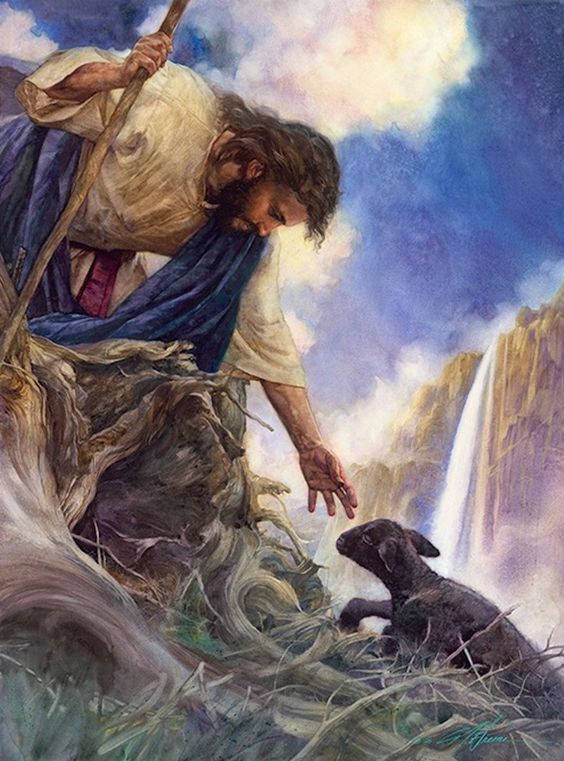
“Without Me” says Jesus, “ye can do nothing.”
A disastrous end awaits those who think that any word of Jesus is jettisonable. He is the Light that lights the lives of intelligent beings. “Without Me,” He says, “ye can do nothing.” Romans 8:34 reads, “Who is he that condemneth? It is Christ that died, yea rather, that is risen again, who is even at the right hand of God, who also maketh intercession for us.” As we did not sit in the house of political legislation when the bill that was passed has become binding on all citizens, so is Divine decree binding on all intelligent beings. The empyrean decision that created man also decreed the modus of salvation of mankind. We were not there when Jesus hung on the sacrificial tree, pronounced dead, His resurrection was witnessed and was seen walking in His resurrected body for forty days. The problem here is whether you believe or not. Inside everyone is the Spirit of God’s conviction that the Bible is true. What one does with the unequivocalness of biblical account of the soteriology is the gravest issue.

Get Jesus initiated by getting born again: pray this prayer, believing it with all your heart. Say,
“Dear heavenly Father, I come to You now in the name of Jesus Christ. I believe in my heart that Jesus is the Son of God. I believe that Jesus died on the cross for my sin. I believe that You raised Him from the dead. I confess with my mouth that Jesus is Lord and I receive Him now as my Lord and my Saviour. I give God all the glory. Amen!”
(…to be continued…)
Read part 1 here
Get part 3. Click
Visits: 498