REJECT THE WORDS OF JESUS TO YOUR OWN PERIL (6)


Go ye into all the world, and preach the gospel to every creature.
(…continues from part five…)
6) How wise is it to choose to ignore the Christ, knowing that He is the Person of Zechariah 12:10? “And I will pour upon the house of David, and upon the inhabitants of Jerusalem, the spirit of grace and of supplications: and they shall look upon me whom they have pierced, and they shall mourn for him, as one mourneth for his only son, and shall be in bitterness for him, as one that is in bitterness for his firstborn.” This is the Second Coming of Jesus Christ. The prophet spoke concerning the Gethsemane abscondment. Matthew 26:56 “But all this was done, that the scriptures of the prophets might be fulfilled. Then all the disciples forsook him, and fled.” It is found in Zechariah 13:7 “Awake, O sword, against my shepherd, and against the man that is my fellow, saith the LORD of hosts: smite the shepherd, and the sheep shall be scattered: and I will turn mine hand upon the little ones.”
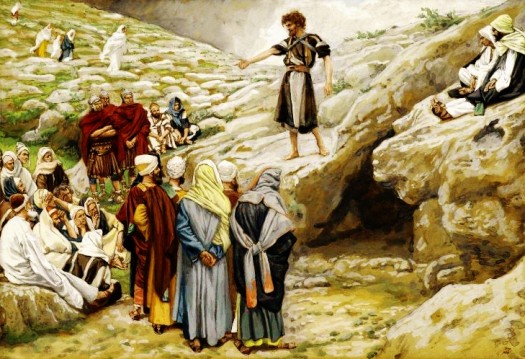
“…and he shall prepare the way before me” – John the Baptist
Malachi 3:1 “Behold, I will send my messenger, and he shall prepare the way before me: and the LORD, whom ye seek, shall suddenly come to his temple, even the messenger of the covenant, whom ye delight in: behold, he shall come, saith the LORD of hosts.” Four hundred years after Malachi’s prophecy, the first prophet, John the Baptist, was sent to the people of God’s covenant, Israel, walking in the likelihood of Elijah, saying, “I am the voice of one crying in the wilderness, Make straight the way of the Lord, as said the prophet Esaias” (John 1:23). Prophet Isaiah had, in an earlier seventh century B.C., prophesied of John the Baptist in Isaiah 40:3-5. Worthy of note is this dramatic vaticination, “Who is this that cometh from Edom, with dyed garments from Bozrah? This that is glorious in his apparel, travelling in the greatness of his strength? I that speak in righteousness, mighty to save” (Isaiah 63:1). There is no gainsaying the distinguishability of the true character of this verse.
Apocryphal leaning teach that the prophecy about the One coming from Edom with dyed garments is Judas Maccabeus. Historical event actually has the documentation of Judas Maccabeus and his war exploit for he overcame the Idumeans, and killed twenty thousand men. Another supposed character of Isaiah 63:1 is Michael, the archangel. John Calvin interpreted the glorious arrayed warrior as Yahweh trampling down on His enemies while seated on the throne in heaven. His argument is that Isaiah was doing prophetic, “Thus sayeth Yahweh.” Insuperable dissatisfactions, from the point of Scripture, render the above three interpretations unfamiliar to scriptural reading of Isaiah 63:1. God the Father, in truth, was heard saying the words of Psalm 110:1. But we know that the dramatic involvement of this verse (Isaiah 40:3-5), from Calvin’s point, cannot be practically ascribed to the Father, Who is never seen physically, in the Scripture, vacating the empyrean throne.
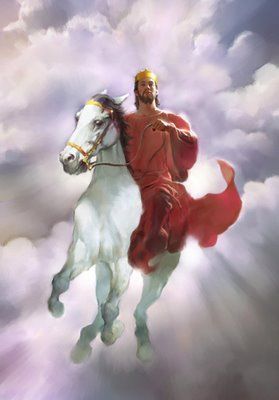
…from Edom, with dyed garments from Bozrah?
It cannot be Michael, fighting for Israel; neither can it also ever be in reference to Judas Maccabeus. The reason is quite simple: this military campaign has a resultant end to salvation. His sanguineous approach is not the blood He shed on the cross. It is the blood of the enemies of God, who He must annihilate to assume His office of King of kings, and Lord of lords. Probably, the prophet, being given the spiritual eyes to apprehend the glorious Warrior God, had asked, reading the first lines of the drama. Then Jehovah Jesus, the Man of war (Exodus 15:3), answered, “I that speak in righteousness, mighty to save:” for none can save, save Jesus. Jesus is the Publisher of righteousness. There are other scriptural references of prophetic verses: Isaiah 11:1-10; Isaiah 28:16; Isaiah 40:1-11; Isaiah 42:1-4; Isaiah 49:1-8; Isaiah 50:2-6. Isaiah 52:13-15; Isaiah 53:1-12; Jeremiah 33:14; Ezekiel 17:22; Ezekiel 34:23. Daniel 2:44; Daniel 7:13; Daniel 9:24-27; Hosea 1:7-11; Hosea 3:5; Joel 2:28-32; Amos 9:11. The others are Micah 5:1-4; Haggai 2:7-9; Zechariah 6:12; Zechariah 14:4 and Malachi 4:2-6.
In the Psalms are nuggets of Messianic revelatory profundities. Let me commence this journey into psalmodic revelation of Jesus with Psalm 16:10 “For thou wilt not leave my soul in hell; neither wilt thou suffer thine Holy One to see corruption.” David saw the Messiah through the Holy Spirit’s inspiration, about a thousand years BC. The Jesus David saw will carry the sins of the world, and be counted among sinners bound for hell, but Jesus will not be a candidate of hellish ruination. His body will not see corruption in the sense that there will be no need to break His legs to hasten His crucifixional death, and more importantly, He will not suffer the attendant decay that dead people undergo.
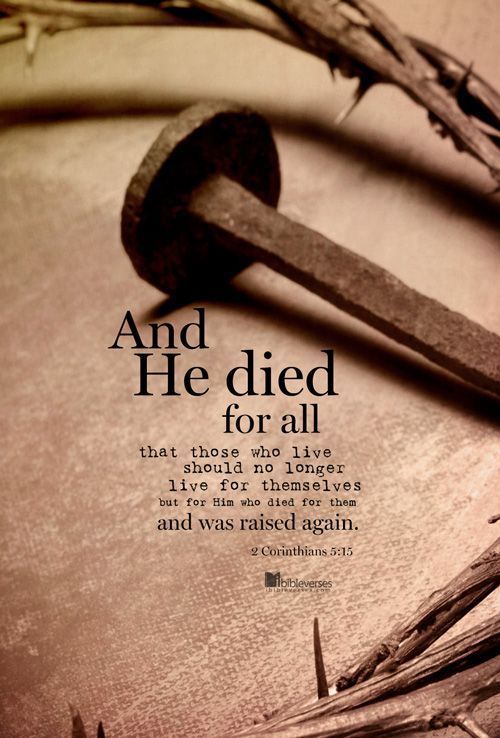
In Psalm 22, the crucifixion event received detailed prophecy. In verse 1, it reads “My God, my God, why hast thou forsaken me? Why art thou so far from helping me, and from the words of my roaring?” Verses 7-8 read, “All they that see me laugh me to scorn: they shoot out the lip, they shake the head, saying, 8) He trusted on the LORD that he would deliver him: let him deliver him, seeing he delighted in him.” Another verse reads, “They part my garments among them, and cast lots upon my vesture” (Psalm 22:18). If He had come to save the people of the world, it will be improper for Him to see corruption. The right pattern of ‘no corruption’ must be in place for the born again Christians to experience. Before Jesus eventually died, centuries after the prophetic utterance, it was historically fulfilled in Matthew 27:46 “And about the ninth hour Jesus cried with a loud voice, saying, Eli, Eli, lama sabachthani? That is to say, My God, my God, why hast thou forsaken me?”
Get Jesus initiated by getting born again: pray this prayer, believing it with all your heart. Say,
“Dear heavenly Father, I come to You now in the name of Jesus Christ. I believe in my heart that Jesus is the Son of God. I believe that Jesus died on the cross for my sin. I believe that You raised Him from the dead. I confess with my mouth that Jesus is Lord and I receive Him now as my Lord and my Saviour. I give God all the glory. Amen!”
(…to be continued…)
Read part 5 here
Get part 7. Click
Visits: 426