HE IS THE WORD OF GOD (two)

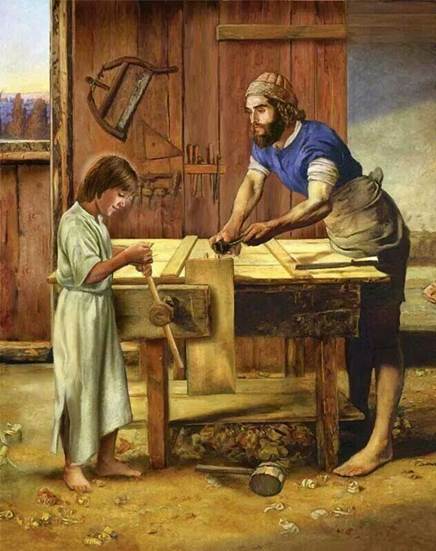
Is this not the carpenter’s son” (Matthew 13:55-58)?
(…continues from part 1…)
2) Even His own people of His earthly sojourn did not believe His Messianic essence. 55) “Is not this the carpenter’s son? Is not his mother called Mary? And his brethren, James, and Joses, and Simon, and Judas? 56) And his sisters, are they not all with us? Whence then hath this man all these things? 57) And they were offended in him. But Jesus said unto them, A prophet is not without honour, save in his own country, and in his own house. 58) And he did not many mighty works there because of their unbelief” (Matthew 13:55-58). Did His own disciples believe Him? John 6:51-66 51) “I am the living bread which came down from heaven: if any man eat of this bread, he shall live for ever: and the bread that I will give is my flesh, which I will give for the life of the world. 52) The Jews therefore strove among themselves, saying, How can this man give us his flesh to eat? 53) Then Jesus said unto them, Verily, verily, I say unto you, Except ye eat the flesh of the Son of man, and drink his blood, ye have no life in you. 54) Whoso eateth my flesh, and drinketh my blood, hath eternal life; and I will raise him up at the last day. 66) From that time many of his disciples went back, and walked no more with him.” Calvinistic “the infinitude cannot be well known by the finite carnality” is here well appreciated. It takes very patient set of eyes to have an ocular grasp even of the close-by nose. It takes the staunch, original believing disciples, who had learnt to love the LORD God with all their hearts, minds, thoughts and strength of resolve to keep staying with Immanuel.
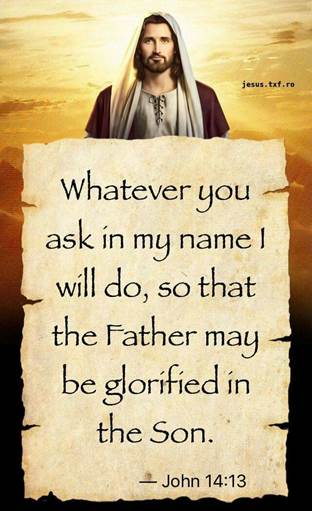
1Corinthians 2:6-8 6) “Howbeit we speak wisdom among them that are perfect: yet not the wisdom of this world, nor of the princes of this world, that come to nought: 7) But we speak the wisdom of God in a mystery, even the hidden wisdom, which God ordained before the world unto our glory: 8) Which none of the princes of this world knew: for had they known it, they would not have crucified the Lord of glory.” How can this Word ever remain the recondite essence of Divinity and yet remain a classification of object of creationism? The Word cannot be partial God and partial entity of creation. That will be freakish rivalry with the Divinity. The Divine Logos is very God of very God. Babel language experience gives irrefragable credence to Jesus’ Omniscience. Billions pray everyday. To the invocating billions and thousands of languages Jesus Christ says, “If ye shall ask any thing in my name, I will do it” (John 14:14).
There is, most certainly, more of Jesus, the Word of God, than our eyes and understanding are capable of apprehending. This, theologically, is what His Word of God essence bespeaks. John 1:1-4 1) “In the beginning was the Word, and the Word was with God, and the Word was God. 2) The same was in the beginning with God. 3) All things were made by him; and without him was not any thing made that was made. 4) In him was life; and the life was the light of men.” The word ‘beginning’ is the Greek archē (ar-khay’): ‘origin, (properly abstract) a commencement, or (concrete) chief (in various applications of order, time, place or rank); the extremity of a thing.’ This theological beginning is the commencement of the creationism. The Author of creation must, of certainty, be in proper existence before His authorship of anything. The same reason why examination papers cannot be as old as or older than the lecturing examiner is what strictly accounts for the reason why the Author of creation must be in existence before the eternal past. The eternal past cannot be accounted for à la scientific notation. The Word of God is the Ancient of days.
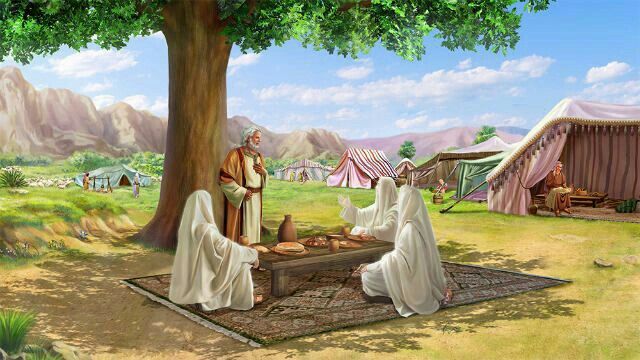
“Your father Abraham rejoiced to see my day: and he saw it, and was glad”
The Jewish negativistic approach to the asseveration, “Your father Abraham rejoiced to see my day: and he saw it, and was glad” (John 8:56); made this Personage: the Word of God, to further flabbergast their thoughts. “Jesus said unto them, Verily, verily, I say unto you, Before Abraham was, I am” (John 8:58). Should one permit curiosity that leads one to the question bordering on the historicity of John 8:56, we have to search the Scriptures. It takes us to Genesis chapter 18. Two of the verses quote father Abraham, 32) “And he said, Oh let not the Lord be angry, and I will speak yet but this once: Peradventure ten shall be found there. And he said, I will not destroy it for ten’s sake. 33) And the LORD went his way, as soon as he had left communing with Abraham: and Abraham returned unto his place” (Genesis 18:32-33). Verse 32 is certainly not a monologue because, “Oh let not the Lord be angry,” is an Abrahamic statement captured in historical documentation. On the other hand, “I will not destroy it for ten’s sake”, is the response of the Adonai in the historicity of the day Abraham saw the Christ (in His preincarnation manifestation) and was happy. Adonai made His way down to our earth; headed straight to Abraham’s abode. The Visitant, escorted by two angels, held discussion with His host, Abraham, and even ate a sumptuous meal in His friend’s house. The LORD God, after His rapprochement with Abraham, left and went up to His empyreal abode; all these in historical facticity. Amen.
Get born again by saying this simple prayer; believing it with all your heart:
“Dear heavenly Father, I come to You now in the name of Jesus Christ. I believe in my heart that Jesus is the Son of God. I believe that Jesus died on the cross for my sin. I believe that You raised Him from the dead. I confess with my mouth that Jesus is Lord and I receive Him now as my Lord and my Saviour. I give God all the glory. Amen!”
(…to be continued…)
Read part one here
Get part three. Click.
Visits: 202