Does The Christ Know Everything? (1)

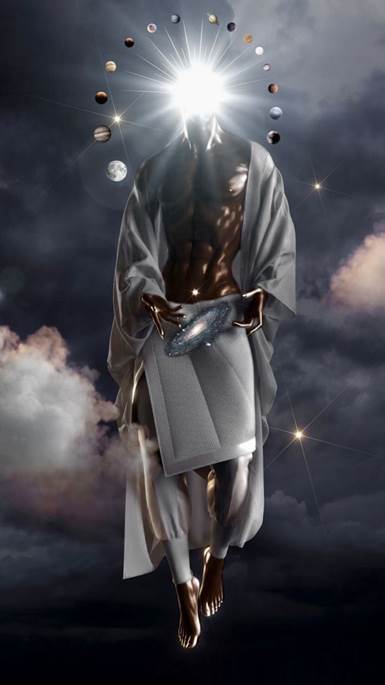
Jehovah Jesus which is, and which was, and which is to come
1) One of the Scriptural verses I hear Jehovah’s Witness people employ in the vitiation of Jesus’ Divine equality with the Father is Mark 13:32 “But of that day and that hour knoweth no man, no, not the angels which are in heaven, neither the Son, but the Father.” Many Bible teachers will quote this verse to prove their stand on the fact that Jesus does not know everything. ‘Knowledge’, from this verse is eidō (I’-do): ‘to see; to perceive with the eyes; to perceive by any of the senses.’ Eidō, from this definition, is experiential knowledge. If there is something God the Father knows which God the Son does not know, then, the Christ is unnecessarily given theological credit than He truly deserves. Is Jehovah’s Witness Christological pedagogism scriptural? Well, let Scriptural steerage lead us to the truth.
Theology by definition is ‘the science of God’. God being eternal should be impossible to be known absolutely. Jesus says in Luke 10:22, “All things are delivered to me of my Father: and no man knoweth who the Son is, but the Father; and who the Father is, but the Son, and he to whom the Son will reveal him.” The word ‘knoweth’ is the Greek ginōskō (ghin-oce’-ko): ‘to become acquainted with; to “know” (absolutely).’ An opinionated mind straying in ignorance is very likely to soliloquize, “Maybe the Son’s absolute knowledge of the Father does come to question, somehow, in this verse;” which is far from the gospel truth. The next Bible verse settles this Christological Omniscience. John 10:15 “As the Father knoweth me, even so know I the Father: and I lay down my life for the sheep.” In this verse, both ‘knoweth’ and ‘know’ are the same Greek ginōskō: absolute knowledge.

Jesus: before the beginning and is the ending.
Possession of absolute acquaintance of an Entity of eternality, most definitely validates the appropriation of absolute knowledge of all things, to the said possessor. Will it surprise me if the reader of this article tends to sniff biblical contradiction? Certainly not; but the truth is that from Genesis to Revelation, you cannot see an iota of contradiction. The Author of the Bible has made sure there is none. So, can Jesus Christ claim not to have a particular knowledge and someone will believe that the Saviour, seated at the right hand of Majesty, has deficiency of Omniscience?
What people fail to see about Jesus is His duality. This duality stands distinctly from philosophical propounding of those who lived before Christ Era: Socrates (470-399 BC), Plato (427-347 BC); or of St. Augustine (354-430 AD) and Rene Descartes (1596-1650 AD). Socrates’ dualism is the belief that the human being is composed of two separate and distinct parts: an immortal soul and a mortal body. He argued that the soul is the true self, is independent of the body, and continues to exist after death. For Socrates, the body is imperfect and temporary, whereas the soul is the perfect and permanent aspect of a person.

Philosophical view of Adamic soul
Plato assumes a distinction between an invisible soul and a visible body, and argues for both the immortality of the soul, and for the theory that the soul undergoes successive reincarnations. Three important dialogues written by Plato: The Meno, The Phaedo, and The Phaedrus all argue that humans exhibit knowledge that they could not have obtained in their current life, presenting this as evidence for the soul’s pre-existence. The Phaedo adds several arguments that the soul will continue to exist after death. One such argument appeals to the soul’s affinity with the eternal forms of which, according to Plato’s theory, material objects are mere copies (78b4–84b8).
Aristotle (student of Plato and teacher of Alexander the Great) did not believe in substance dualism, like Plato, but proposed a different kind of “dualism” called hylomorphism (the unity of soul and body), which views the soul as the form and the body as the matter of a single, unified human being. For Aristotle, the soul is the principle that gives life and shape to the body, and they are inseparable; when the body dies, so does the soul. Saint Augustine’s philosophy of mind is deeply shaped by his dualistic understanding of reality. Dualism, in simple terms, is the belief that there are two fundamental substances: the material (body) and the immaterial (soul or mind). Augustine inherited this dualistic approach from Plato, who famously distinguished between the world of sensible things (the physical world) and the world of Forms (the world of ideal, non-material realities). However, Augustine’s dualism also integrated Christian theological concepts, which placed a significant emphasis on the soul as the seat of human identity and moral responsibility.

Soul of man
Descartes’ dualism is the belief that the mind and body are two distinct and separate substances: a non-physical, thinking mind and a physical, non-thinking body. This metaphysical view, also known as Cartesian dualism, posits that mental events and physical events are fundamentally different and can exist independently of one another. Descartes famously argued for his existence with the phrase “I think, therefore I am” (cogito, ergo sum).
Duality of Jesus, raising the ontological argument of the hypostatic union, it confounds science in the unbelievable compound reality of one hundred-percent-Man and one-hundred-percent-God in one entity called Jesus Christ. This teaching continues in the next part.

Getting born again is a conscious effort on the part of an individual. Get born again. Say this sinner’s prayer.
“Dear heavenly Father, I come to You now in the name of Jesus Christ. I believe in my heart that Jesus is the Son of God. I believe that Jesus died on the cross for my sin. I believe that You raised Him from the dead. I confess with my mouth that Jesus is Lord and I receive Him now as my Lord and my Saviour. I give God all the glory. Amen!”
(…to be continued…)
Read the previous post here
Read part 2 here
Visits: 104