HE IS THE WORD OF GOD (four)

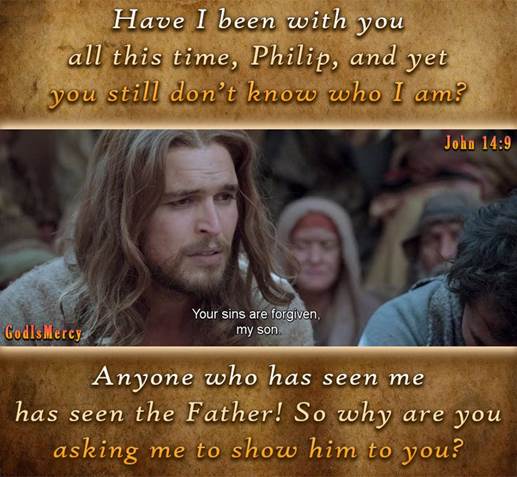
John 14:9
(…continues from part 3…)
4) John 14:9 “Jesus saith unto him, Have I been so long time with you, and yet hast thou not known me, Philip? He that hath seen me hath seen the Father; and how sayest thou then, Shew us the Father?” Search the entire Scriptures, and you will not find anywhere that anybody called Jesus by the sobriquet Immanuel. In all the three years He had been with them they had marvelled at His teachings. Regardless of the cult-like proximity they shared with Immanuel, they could not apprehend His true essence. Did they not recall the revelation the Father gave to Peter as regards His Christological quiddity? They found it almost impossible to acknowledge the theological connectivity that makes the Christ being Immanuel, the true incarnation of the Father. And the reason is not farfetched, there is absolutely more to Jesus than meets the carnality of human aggregatory eyes of judgment. Not until it is brought to your knowledge how can you fathom the quiddity of the Jesus Christ, whose goings forth is from of old from everlasting: the Ancient of days?
What does it betoken, Christologically, by the assertive, “He that hath seen Me hath seen the Father”? Does this statement of Divinity not take us back to John 10:30 “I and my Father are one”? The Members of the Trinity constitute one indivisible God when the latria is involved. Each One of Them possesses celestial Fatherhood. The One Who vacates not the empyrean throne is God the Father. Seated also in the event of creationism or better still of re-creationism, is the Holy Spirit, providing all the energy to enable Adam to prefigure Jesus and for the Woman to represent the Church, making Him the Paternal source of being. Who is the Everlasting Father of Isaiah 9:6? Is it not Christ Jesus? Coeternality of the Members of the Godhead accounts for their coetaneous existence. The word ‘one’ of John 10:30 is heis (hice) meaning: ‘essence’. So, what Jesus told the disciples was, “I share same nature in all respects with the Father: the perfections, attributes, glory, that is read of Him, I, the Christ, equally possess. Philip, I am the express image of the Father, so, how could you ask Me to show you the Father?” Hallelujah!
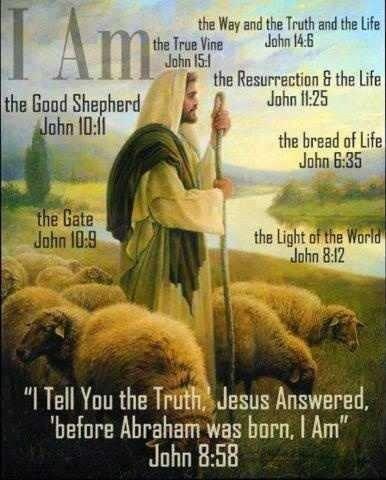
From the Commentary of Biblical Illustrator it explains the phenomenon of “The Father manifested in the Son” thus: Our Lord meant that in His person, as well as by His doctrine, miracles, benevolence, life, death, resurrection, ascension, God is manifested, as far as could be, even to our senses, as well as to our understanding, and that this is the clearest manifestation God has been pleased to make of Himself to man on earth. Hence, to such as wish to know God, we must say, Behold, and consider, not only His works of creation; look not only at the dispensations of Providence, which manifest such attributes as the works of creation were not calculated to discover; nor read and consider only His Word, which shows Him still more; but behold the person of His Son, who is “the image of the invisible God, the first born of every creature” (Col 1:15; Heb 1:3; Joh 1:18 (refs3)). Would we discover the Father’s wisdom? Let us hearken to Him who is the wisdom and word of God incarnate. Would we know the Father’s power? Let us observe it in the miracles of Christ. Would we know how holy God is, and the nature of His holiness? Let us observe the spirit which Jesus breathed and the conduct He maintained. Would we know whether God be a kind and compassionate Being, and what is the nature of His benevolence and love? We must look how these qualities were displayed in the character of Jesus Christ. Would we see His meekness, patience, forbearance, and long suffering? Let us observe how these dispositions shone forth in Christ. Would we have a display of His justice? Let us see sin condemned and punished in Him who “gave Himself for us, an offering and a sacrifice to God.” Do we wish to see the love of God exemplified? Observe Christ dying for us, “dying for the ungodly;” “when we were enemies, reconciling us to God by His death.” Would we know God as our Creator? Observe Christ secretly and insensibly multiplying the loaves and fishes; observe Him giving sight to the blind, and life to the dead. Would we know God as our Preserver? Let us contemplate Jesus upholding Peter while walking on the water. As our Governor? Let us observe Him controlling the powers of nature, “rebuking the winds and the sea, and producing a great calm.” As our Redeemer? See Him “giving His life a ransom for us.” As our Saviour? Consider Him coming “to seek and to save that which was lost.” Would we know God as a Friend? Mark the familiarity and tenderness with which Jesus conversed with His disciples. As a Father? Observe Jesus “begetting us again by His Gospel,” and see His parental care for His disciples. In a word, if we wish to know the mind, dispositions, and intentions of God towards man, we must see them delineated and exhibited in the doctrine, example, and works of Christ. In order to this, however, it is necessary we should be enlightened by the Divine Spirit (1Co 2:11); that we be “taught” and “learn of the Father.” (From Biblical Illustrator).
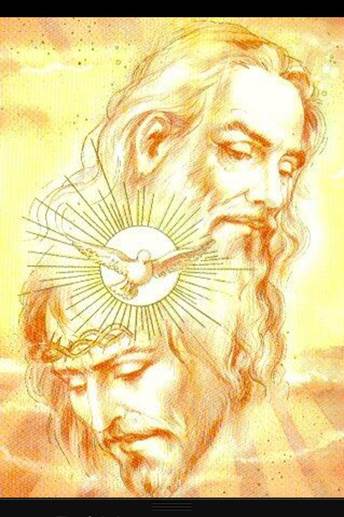
“…he that hath seen me hath seen the Father”
Another Commentary runs thus: “Philip expressed a universal desire of mankind: to see God (cf. Ex 33:18). In a perverted form this desire leads to idolatry. Philip was probably longing for a theophany (cf. Ex 24:9-10; Isa 6:1) or some visible display of God’s glory. Jesus’ statement, Anyone who has seen Me has seen the Father (cf. John 12:45), is one of the most staggering claims He ever made. The Father is in Jesus and Jesus perfectly reveals Him (1:18). Hence no theophany was necessary, for by seeing Jesus they were seeing the Father!” (from Bible Knowledge Commentary/Old Testament Copyright © 1983, 2000 Cook Communications Ministries; Bible Knowledge Commentary/New Testament Copyright © 1983, 2000 Cook Communications Ministries. All rights reserved.)
Yet another annotation on John 14:9 exegetes: “Could any creature say these words? Do they not evidently imply that Christ declared himself to his disciples to be the everlasting God? (Adam Clarke Commentary).” Selah!

Get born again by saying this simple prayer; believing it with all your heart:
“Dear heavenly Father, I come to You now in the name of Jesus Christ. I believe in my heart that Jesus is the Son of God. I believe that Jesus died on the cross for my sin. I believe that You raised Him from the dead. I confess with my mouth that Jesus is Lord and I receive Him now as my Lord and my Saviour. I give God all the glory. Amen!”
(…to be continued…)
Read part three here
Get part five. Click.